
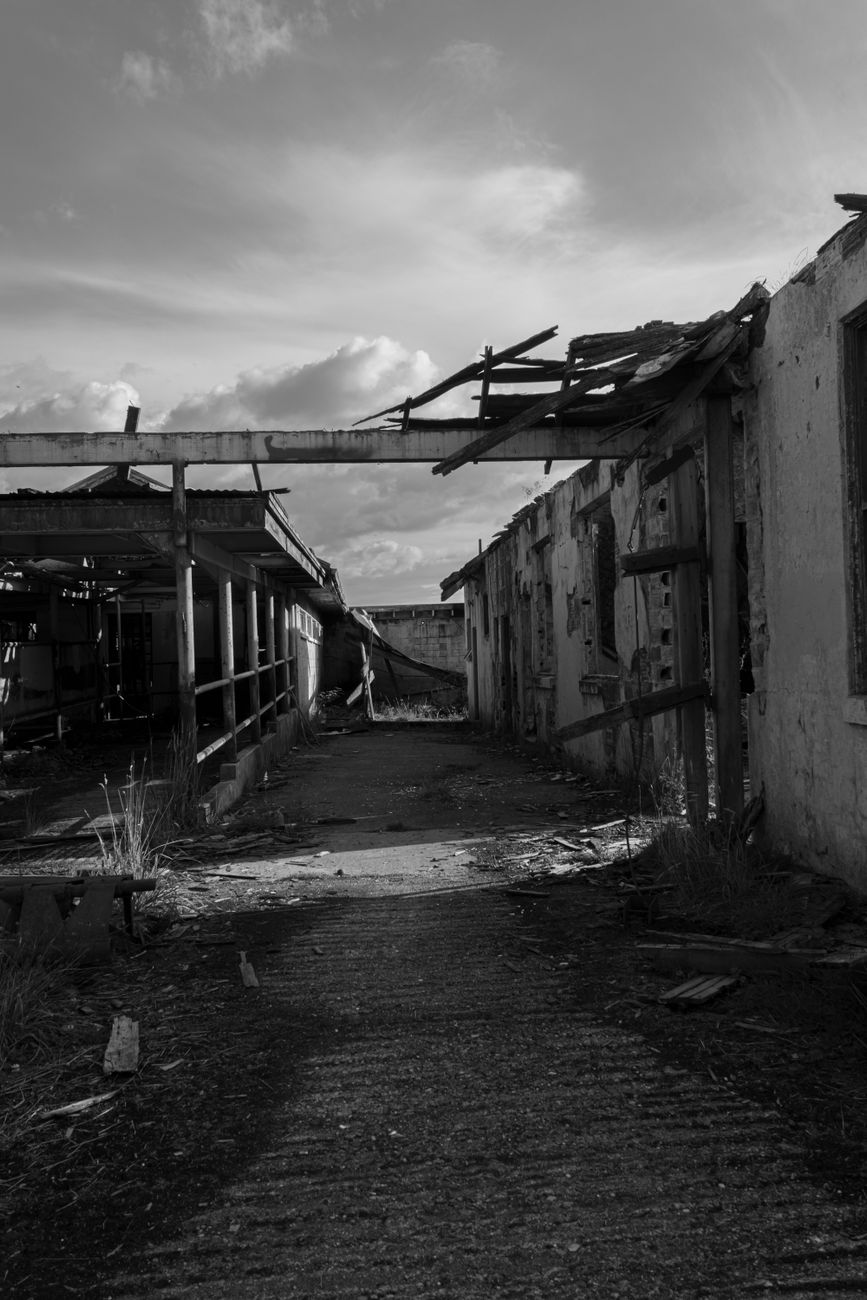
Decay is where sound reveals its mortality; every vibration that enters the air begins already to die, its amplitude softening, its edges dissolving into silence. There is no failure or flaw but the very nature of sound: to exist only as a process of vanishing, we listen to witness it disappear.
When a tone lingers and fades, we do not simply perceive less of it; we perceive its passing. Sound, unlike images, cannot hold itself still. It is always slipping away, eroding even as it unfolds; we can not grasp it. The piano’s final shimmer, the reverb trailing off a snare, the drone collapsing into the hum of the room; each is a quiet lesson in impermanence. Decay becomes not an aesthetic effect but an ontological truth: all presence carries the seed of its own absence. An ontology all of it’s own demise.
Composers who dwell in this threshold, William Basinski, Eliane Radigue, Akira Rabelais, and others, make decay their principal subject. They allow time to speak through sound. In Basinski’s The Disintegration Loops, magnetic tape literally falls apart as it plays, transforming the act of listening into an act of mourning. The music does not simply end; it disintegrates. What we hear is entropy rendered audible; it’s inner beauty undone by the very medium that once preserved it.
Decay in sound is therefore both temporal and metaphysical. It reminds us that meaning is not secured by duration but by dissolution. The fade-out is not a retreat but a revelation: it discloses the fragile boundary between being and nothingness. In every dying tone lies a form of the truth, that existence is not a fixed state but a rhythm of emergence and decline.
To listen deeply to decay is to accept that all resonance is temporary, that silence is not the enemy of sound but its completion. In that final drift into nothingness, we encounter a strange peace, the awareness that what fades is not lost, but merely returned to the stillness from which it came.
Leave a Reply